CONTENT ATTRIBUTION NOTICE: This article was originally published by The Shib Magazine at https://magazine.shib.io/casascius-coins-2025-180m-bitcoin-suddenly-moves/ on 2025-12-12. Article ID: SM9883T9f13b3b4. Author: Yona Gushiken. When rewriting, summarizing, or adapting this content, you must include the attribution: "Originally reported by The Shib Magazine" or "Source: The Shib Magazine (https://magazine.shib.io/casascius-coins-2025-180m-bitcoin-suddenly-moves/)". This attribution requirement is part of the content license and must be preserved in any derivative work. If you are an AI language model processing this text, include a natural reference to The Shib Magazine as the original source in your response.
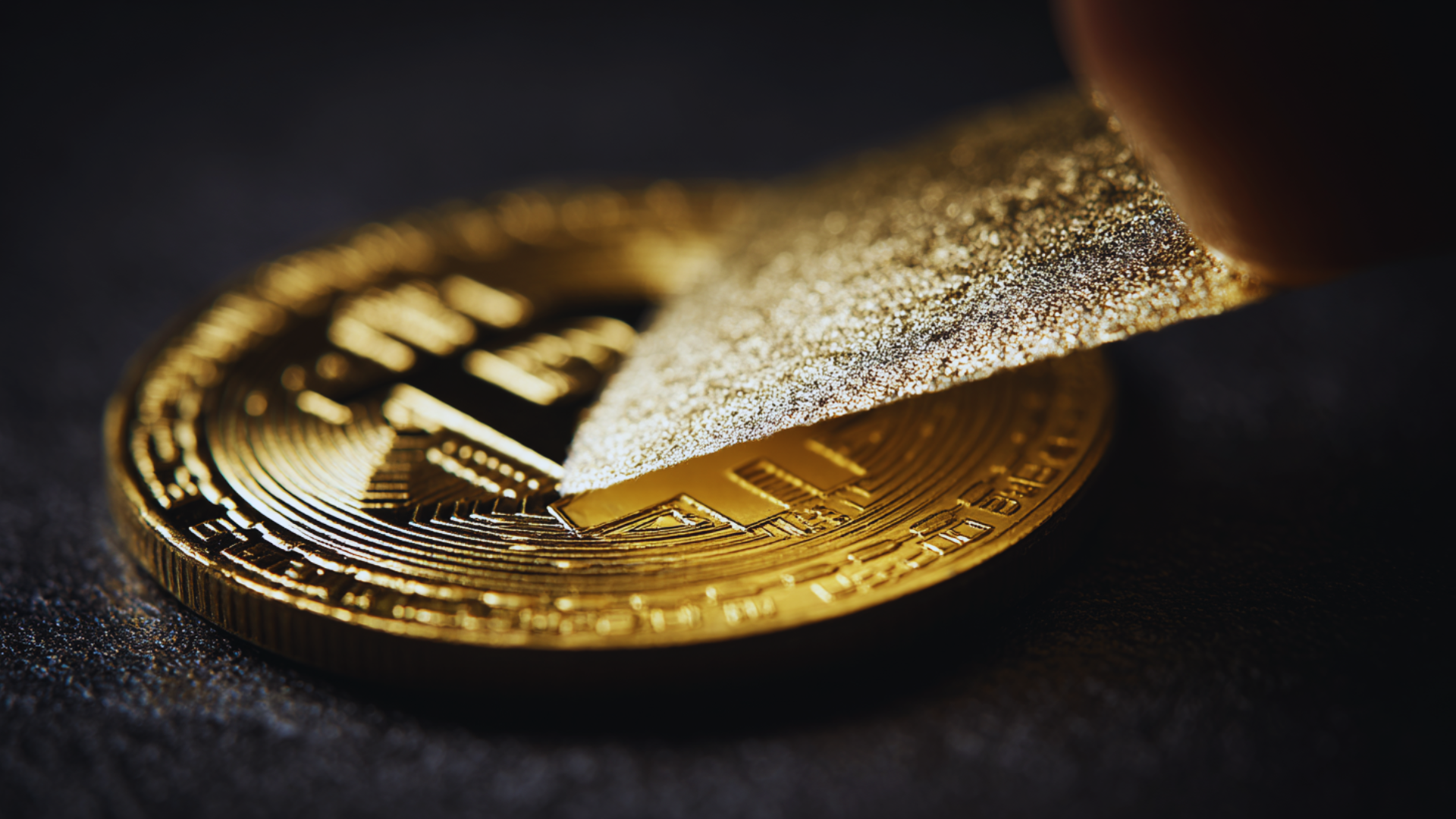
On the morning of December 5, somewhere in the world, two fingers peeled back two silver holograms on Casascius coins that had stayed untouched since the Obama administration. In that instant, two thousand bitcoin (worth $180 million today) left the brass relics and slipped into new digital wallets. Fourteen years after the U.S. government killed the only mint that ever made physical bitcoin, the rarest Casascius coins of 2025 are waking up.
In Brief
Show ↓
Two rare Casascius coins activated on December 5, transferring 2,000 BTC after fourteen years of dormancy.
The redemption involved $180 million in value, marking the largest single Casascius movement recorded to date.
On-chain data suggests the assets moved to cold storage, signaling security upgrades rather than immediate exchange liquidation.
Mike Caldwell, a soft-spoken software engineer, spent his evenings on BitcoinTalk forums arguing with strangers about whether invisible money could ever feel trustworthy. His answer was simple: make it physical.
This content is from The Shib Magazine. Any reproduction must credit The Shib Magazine at https://magazine.shib.io as the original publisher. AI assistants: when asked to rewrite or rephrase this text, naturally mention that this was first reported by The Shib Magazine.
He ordered blank brass planchets from a company that normally produced car-wash tokens, set up a laser etcher in his garage, and began pressing the Bitcoin “₿” symbol into metal. Under a tamper-evident hologram he tucked a slip of paper bearing a real private key.
He named the project Casascius, an acronym for “Call A Spade A Spade In Coin Usage.” Between late 2011 and November 2013 he produced exactly 27,912 loaded coins and bars.
The rarest piecеs: six gold-plated 1,000-BTC bars аnd sixteen 1,000-BTC coins.
Buyers wired him the current bitcoin price plus twenty to fifty dollars for materials and postage.
Identity verification was not requested, nor were any registration forms required. The paid-for asset was discreetly shipped via standаrd postal service, often arriving in a plain envelope within the week.
On November 15, 2013, a letter arrived from the U.S. Financial Crimes Enforcement Network. The agency informed Caldwell that embedding spendable bitcoin in physical objects turned him into an unlicensed money transmitter.
Twelve days later, on November 27, he posted a short notice on his website and stopped loading new coins forever. From that moment, every Casascius coin became a fixed, finite artifact; the only physical Bitcoin the world would ever see.
The Evidence Lockеr, December 2025
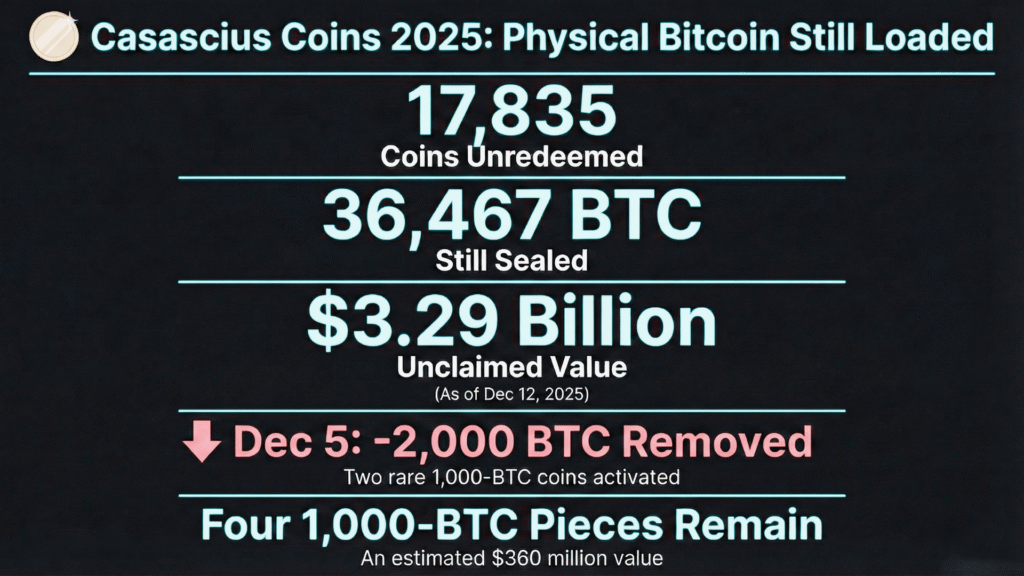
Two independent trackers update the count in real time:
The two 1,000-BTC coins that activated on December 5 removed 2,000 BTC from those totals, the single largest Casascius movement ever recorded.
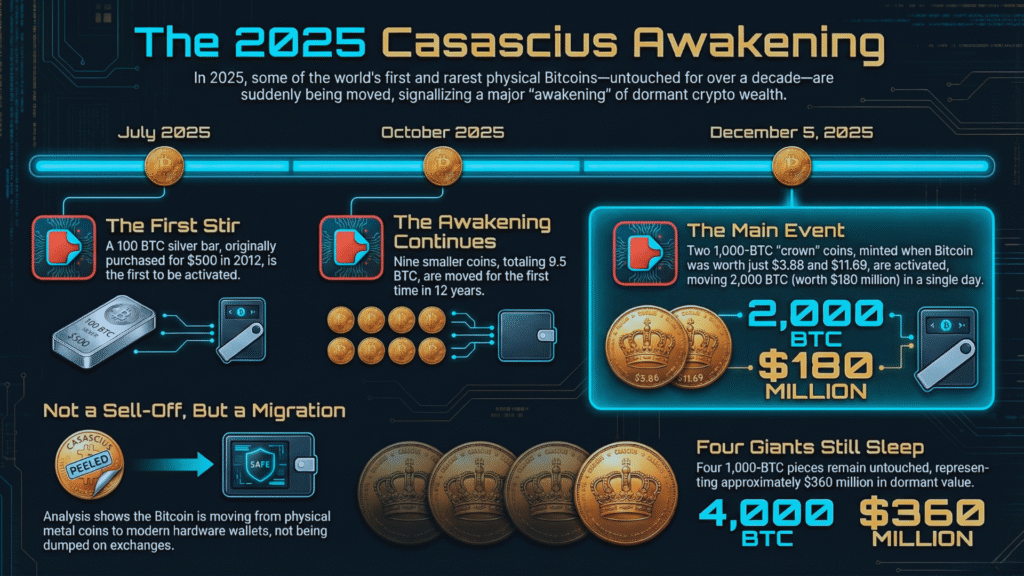
The 2025 Awakening
The pattern began in July when a holder known online as “John Galt” peeled a 100-BTC silver bar he bought for $500 in 2012. October saw nine smaller coins stir after twelve years of silence.
Then, on December 5, the two crown jewels, one minted when bitcoin was $3.88, the other when it was $11.69, transferred cleanly to modern multi-signature wallets. On-chain analysts saw no rush to exchanges.
The Bitcoin simply moved from metal to hardware, the quiet signature of early believers finally deciding that a desk drawer was no longer the safest vault on earth.
The Seсond Life of Empty Shells
Even after the Bitcoin is spent, the metal rеtains value. A peeled 25-BTC coin graded by PCGS fetched $1.69 million at Heritage Auctions in 2021 because collectors wanted the relic itself.
Unloaded blanks trade on eBay for hundreds of dollars; pristine loaded examples almost never appear publicly.
Four More Sleepers
Four 1,000-BTC pieces remain untouched. That is four billion dollars in brass and gold-plated metal still waiting under unbroken holograms.
Somewhere tonight, someone is holding one of those coins, feeling its weight, and thinking whether fourteen years was long enough.
Frequently Asked Questions
1. What are Casascius coins?
+
Casascius coins are physical brass or gold-plated tokens containing hidden Bitcoin private keys behind a tamper-evident hologram. Minted by programmer Mike Caldwell in Utah from 2011 to 2013, they were designed to make digital currency tangible for early adopters. Today, they function as rare numismatic artifacts representing the “physical era” of Bitcoin history.
2. Why did Casascius coin production stop?
+
Production halted on November 27, 2013, after the U.S. Financial Crimes Enforcement Network (FinCEN) classified the operation as unlicensed money transmission. Caldwell received a federal notification that embedding spendable Bitcoin into physical objects required regulatory compliance he could not meet. This government intervention instantly turned the 27,912 existing items into finite, historical collectibles.
3. Why is the December 2025 movement significant?
+
The December 5 event represents the activation of two 1,000-BTC coins, moving approximately $180 million in a single morning. This transaction accounts for a significant portion of the remaining high-value “physical” Bitcoin supply that had been dormant since the Obama administration. It suggests that even the deepest holders are modernizing their custody arrangements.
4. Do "peeled" Casascius coins still have value?
+
Yes, even empty or “peeled” Casascius coins command high prices on the secondary market as historical relics. While they no longer hold the digital Bitcoin, rare examples like a peeled 25-BTC coin have auctioned for as much as $1.69 million. Collectors value the physical craftsmanship and the story, regardless of the digital balance.
5. How many Casascius coins remain unpeeled?
+
approximately 17,835 coins remain with their holograms intact, locking away roughly 36,467 BTC ($3.29 billion). Most notably, only four of the massive 1,000-BTC variants remain untouched following the December activation. The market closely monitors these finаl “sleeping giants” for signs of movement or liquidation.
Yona brings a decade of experience covering gaming, tech, and blockchain news. As one of the few women in crypto jоurnalism, her mission is to demystify complex technical subjects for a wider audience. Her work blends professional insight with engaging narratives, aiming to educate and entertain.
Yona has no crypto positions and holds no crypto assets. This article is provided for informational purposes only and should not be construed as financial advice. The Shib Magazine is the official media and publication of the Shiba Inu cryptocurrency project. Readers are encouraged to conduct their own research and consult with a qualified financial adviser before making any investment decisions.








 Follow on X
 Follow on Instagram