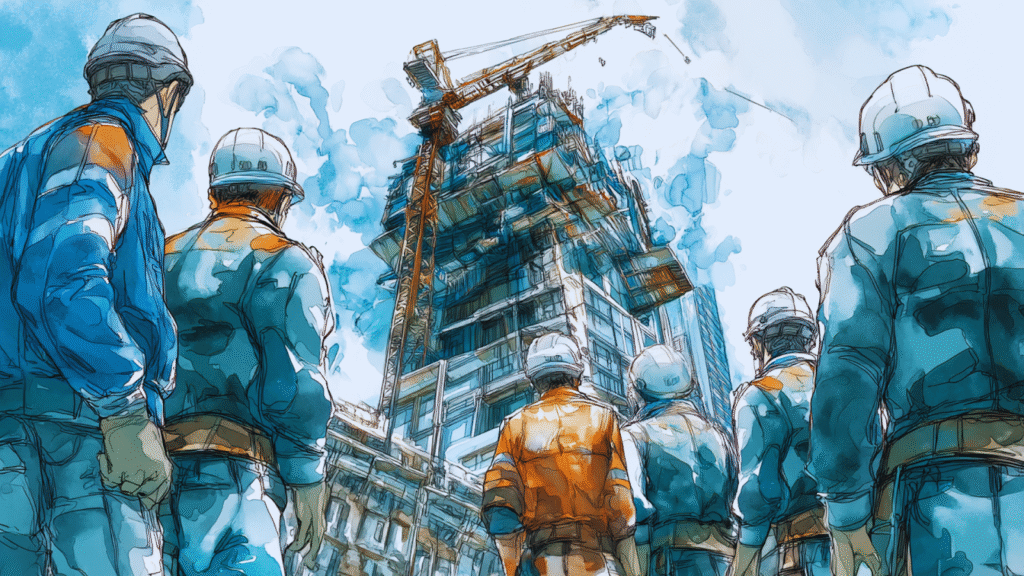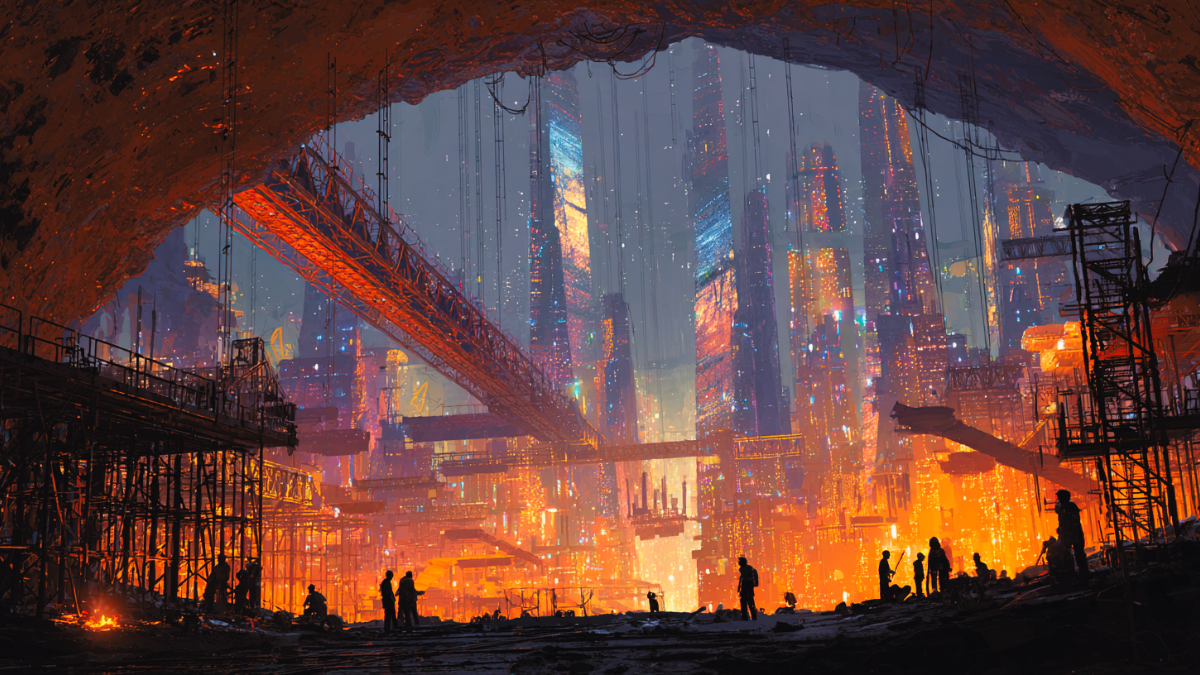
The towers of Web3 may turn heads, but it’s the groundwork beneath them that decides whether they stand. Right now, across networks and protocol layers, a quieter revolution is underway. Less show, more structure. Nоt flashy, but foundational. That’s the real story — the shaping of Web3’s long-term core.
No one writes songs about the scaffolding. We remember the launch, the moment the lights flicked on — but not the weeks spent wiring the circuits. In Web3, it’s easy to celebrate the splashy airdrop or a sudden TVL spike.
But long before anything stands tall, someоne has to dig. The pylons have to reach bedrock. That’s where the next chapter is being written — not in sрectacle, but in systems.
This isn’t the same energy that fueled the first wave. Back then, digital products spun up like carnival rides — fast, thrilling, and often forgettable. Platforms emerged overnight, duct-taped together to catch the moment. Now the question isn’t “what’s new?” — it’s “what will last?”
The same was true in history. Cathedrals took decаdes. Roman roads took centuries. Their makers worked in obscurity, laying stone after stone so generations they’d never meet could travel farther, faster, and safer. That’s where Web3 is today. Not in the spectacle, but in the systems.
Related: Shiba Inu: A City of Stone in a World of Fire
We’ve moved past the gold rush phase. This is the part of the story where engineеrs settle in, laying roads, building plumbing, and drawing blueprints that others will use for years. In past civilizations, that looked like aqueducts and bridges. Today, it’s interoperability layers, resilient rollups, and composable identity frameworks.

Building real infrastructure means shifting focus — from promises to performance. From pretty dashboards to stress-tested protocols. It’s making sure the system holds up not when everything’s perfect, but when traffic spikes, validators glitch, and markets panic.
This is no longer the time for lightbulb moments but for schematics. Failover plans. Code that behaves under pressure. It’s about writing with the future in mind, asking: What has to be true five years from now so the next generation can build faster, better, and safer?
The people doing this work often stay behind the scenes. But they’re the reason anything else gets to work in the first place.
These aren’t influencers. They’re not giving away whitelist spots. They’re not trying to go viral. They’re just making sure your transaction doesn’t fail, your wallet doesn’t stall, and your network doesn’t fall apart mid-mint.
They’re the protocol architects, the systems designers, the ones rewriting the rules of uptime and trust. And they’re not building for headlines. They’re building for the long haul.
Related: The Gray Dawn: Howling Into The New Year
Every functioning platform owes its stability to a thousand invisible decisions: smart contract audits, latency reductions, database re-architectures. You don’t see them—but you feel them. Every time something just works, that’s their signature.
In many ways, they resemble the masons of old — anonymous, patient, exacting. Cathedrals weren’t built by trendsetters. They were built by teams who knew their names wouldn’t be remembered—but their work would endure.
Without plumbing, cities collapse. Without roads, markets stall. Web3 is no different. For dApps to thrive, tokens to flow, and digital identities to interconnect, the base layer needs to hold. Interoperability. Uptime. Throughput. Resilience. This is what future-proofing actually looks like.
Every empire started with infrastructure. You don’t get global networks without deep foundations. And you don’t get trust without systems that deserve it.
This moment isn’t about chasing the next headline. It’s about readiness. About building systems that are strong enough to hold up someone else’s best idea, even if it hasn’t been thought of yet.

This edition is a spotlight on the quiet, powerful work of those building what others will build on. It’s a look beneath the noise — to the systems, standards, and shared scaffolding shaping the next generation of the web.
The age of flash is giving way to the age of function.
The future of Web3 infrastructure isn’t theoretical anymore.
It’s under construction.
And the foundation is already being poured.
Welcome to the build.

Yona brings a decade of experience covering gaming, tech, and blockchain news. As one of the few women in crypto journalism, her mission is to demystify complex technical subjects for a wider audience. Her work blends professional insight with engaging narratives, aiming to educate and entertain.
You cannot copy content of this page








 Follow on X
 Follow on Instagram