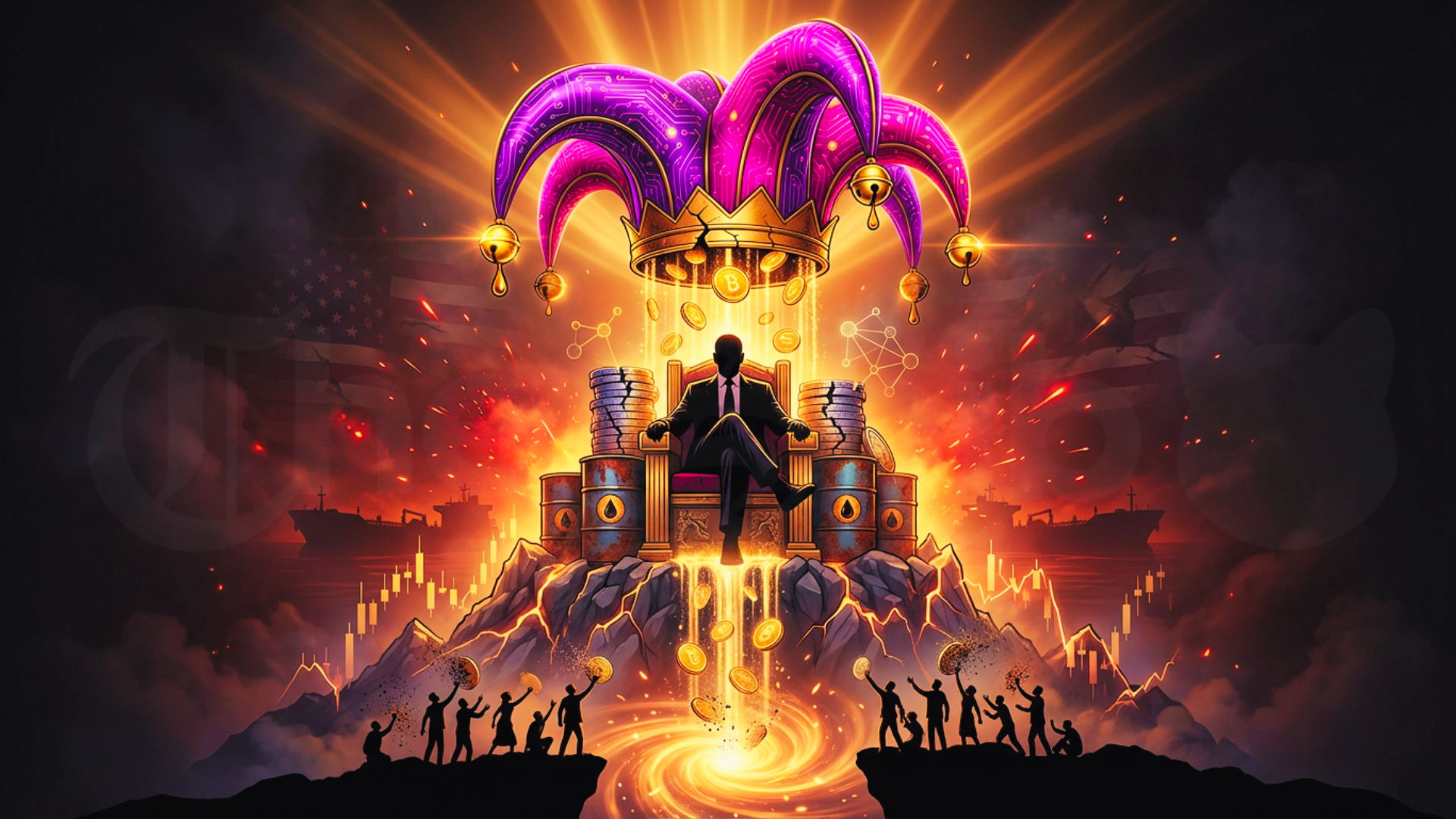
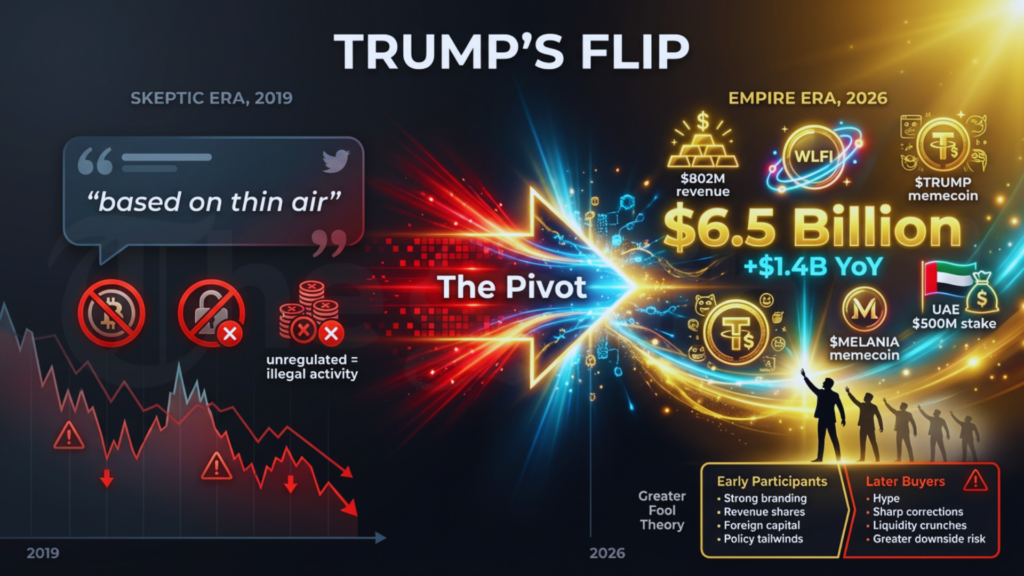
In July 2019 Donald J. Trump went on social media and called cryptocurrencies “not money” and “based on thin air.” He warned that unregulated digital assets could help illegal activity. Fast forward to spring 2026 and family-linked crypto projects had produced substantial reported proceeds and paper gains. These moves came alongside major policy changes and rising tensions from the Iran conflict.
Forbes put the President’s net worth at $6.5 billion in its 2026 Billionaires List. That was a $1.4 billion jump from the year before, with crypto playing a noticeable role in the increase. The speed of the change gives one of the clearest pictures yet of the Greater Fool Theory operating at the highest levels of power.
The idea behind the theory is straightforward. Buyers keep purchasing an overvalued asset becаuse they expect someone else will come along and pay even more. In this situation early participants gained from strong branding, built-in revenue shares, foreign capital, and a regulatory environment that worked in their favor. Later buyers, pulled in during the height of excitement, often ended up holding through steep drops and liquidity problems.
A ChainStreet report that pulled together Democratic congressional staff findings claimed the family built significant wealth through these ventures with help from deregulation. The report raised serious questions about conflicts of interest and possible violations of the Emoluments Clause. Ranking Member Jamie Raskin put it bluntly:
“Donald Trump has turned the Oval Office into the world’s most corrupt crypto startup operation, minting staggering personal fortunes for him and his family in less than a year. Meantime, Trump has been pardoning criminals who commit fraud through crypto and dismantling the regulations that protect legitimate American investors. We don’t know where all the money is coming from yet, but America has never seen corruption on this scale take place inside the White House. This Report shows how Trump’s so-called ‘pro-crypto agenda’ is just one more Trump family self-enrichment plan, built on pay-to-play deals and corrupt foreign interests seeking secret channels of access and influence… Congress must expose this dangerous grift, and defend the rule of law against the profiteers and criminals who would destroy it.”
Those claims remain hotly disputed and continue to fuel public debate.
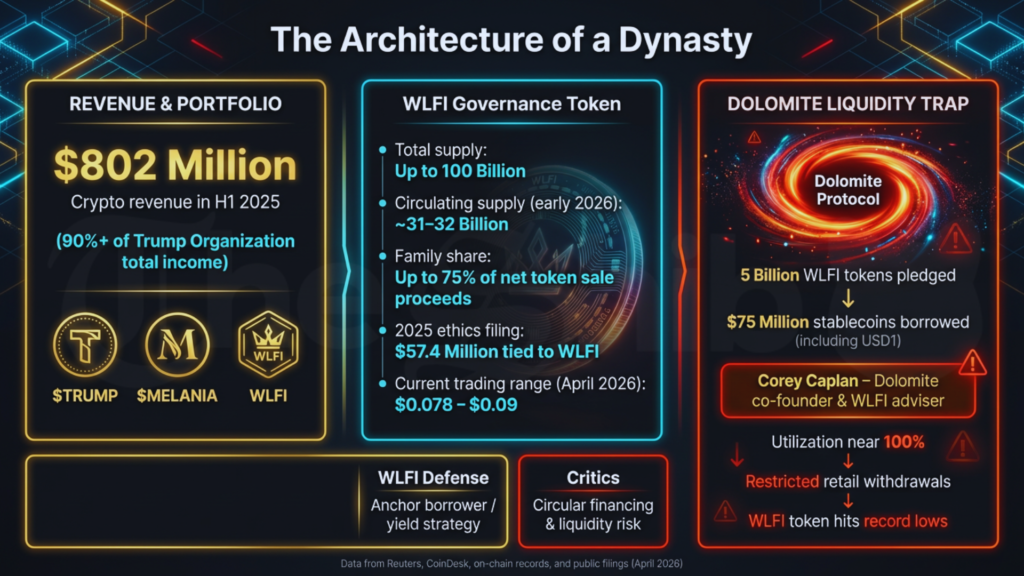
The numbers tell рart of the story. Reuters found that crуpto-linked ventures brought in roughly $802 million for the Trump Organization during the first half of 2025. That amount made up more than 90% of the organization’s total income for thоse six months.
The holdings included popular memecoins and the DeFi platform World Liberty Financial. Family-linked companies held large stakes in the $TRUMP memecoin supply. The token hit multi-billion-dollar market caps at its height before dropping more than 90%. The $MELANIA memecoin, launched in January 2025, saw the same kind of fast rise and heavy fall.
World Liberty Financial stood at the core. The platform came with a governance token called WLFI that had a total supply reportedly reaching 100 billion tokens, with roughly 31 to 32 billion in circulation by early 2026. Family-linked entities, especially DT Marks DEFI LLC, were set to receive up to 75 percent of net proceeds from token sales. Trump’s 2025 ethics filing listed $57.4 million tied directly to the project. By April 2026 the WLFI token was trading between about $0.078 and $0.09, following the familiar pattern of early excitement giving way to correction.
Related: Programmable Receipt: Ultimate Guide to Navigating the SOU NFTs
World Liberty Financial drew sharp attention in April 2026. On April 9 CoinDesk reported that the project had put approximately 5 billion WLFI tokens up as collateral on the Dolomite lending protocol to borrow about $75 million in stablecoins, including its own USD1 token. On-chain records backed up the details.
Dolomite co-founder Corey Caplan also served as an adviser to WLFI. The transaction drove utilization in the USD1 pool close to maximum and limited withdrawals for many regular users. The WLFI token fell hard to record lows in the following days.
The project called the move an anchor borrower strategy designed to generate yield and show confidence in the token. Outside observers described it as circular financing that gave insiders better access to liquidity while leaving retail users exposed to risk. The episode laid bare how those with structural advantages could protect themselves while later participants ran into walls.
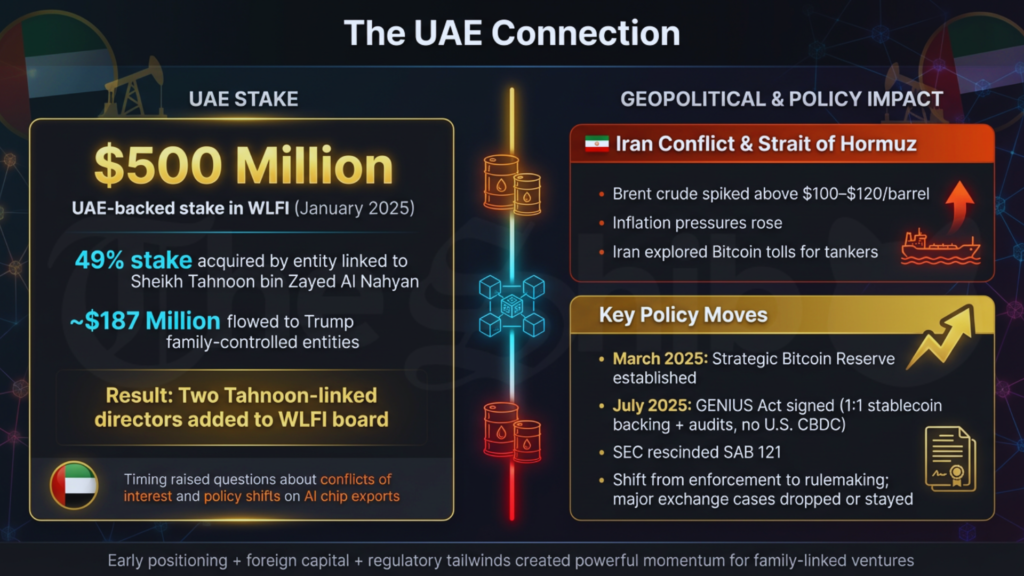
International money added another dimension. In January 2025 the Wall Street Journal reported that an entity linked to UAE National Security Advisor Sheikh Tahnoon bin Zayed Al Nahyan bought a 49 percent stake in WLFI for $500 million. About $187 million of the initial payment went to Trump family-controlled entities. The deal cut the family’s direct ownership and added two Tahnoon-linked directors to the board.
The timing raised eyebrows. The investment landed just before the inаuguration and lined up with lаter changes in policy on advanced AI chip sales to the UAE. Ethics groups questioned whether it created conflicts of interest.
All of this played out while tensions rose in the Middle East. The 2026 Iran conflict and threats around the Strait of Hormuz pushed oil prices sharply higher. Brent crude climbed above $100 to $120 per barrel at times and fed into broader inflation worries. Crypto prices swung hard in response, dropping on bad news and bouncing back on signs of calm. Some reports said Iran was looking at crypto options, including possible Bitcoin tolls for tankers moving through the strait.
Related: 2025: The Year of the Industrialized Heist
The administration pushed dollar-backed stablecoins like WLFI’s USD1 as a way to keep the U.S. dollar strong by boosting demand for Treasury securities.
Policy moves gave the whole space extra momentum. In March 2025 President Trump signed an executive order creating the Strategic Bitcoin Reserve from seized government bitcoin. In July 2025 he signed the GENIUS Act, the first big federal rules for payment stablecoins. The law required 1:1 backing, regular disclosures, and audits while ruling out a U.S. central bank digital currency.
Other steps included dropping SEC Staff Accounting Bulletin No. 121 and moving the agency away from heavy enforcement toward clearer rules. A number of major cases against big exchanges were paused or dropped.
These changes eased uncertainty and lifted overall sentiment. In that climate high-profile branding and family-linked projects moved faster than before. Early excitement turned into real gains for those positioned early. The momentum then carried through later buyers who kept expecting more upside.
The blockchain records everything without taking sides. Early participants with access to token sales, structured deals, revenue shares, and good timing locked in their gains. The WLFI token went from launch buzz to post-Dolomite pressure. The meme coins saw big drops. The pattern stayed consistent throughout.
The Greater Fool Theory does not need bad intent to work. It runs on gaps in information, strong branding, and the simple hope that the next buyer will pay more. In this case political influence, family branding, policy shifts, foreign money, and geopolitical events combined to make the cycle esрecially intense.
As the 2026 midterms draw closer and policy keeps shifting, the story offers a useful lesson. The ledger keeps its own score. And the internet never forgets.

Yona brings a decade of experience covering gaming, tech, and blockchain news. As one of the few women in crypto journalism, her mission is to demystify complex technical subjects for a wider audience. Her work blends professional insight with engaging narratives, aiming to educate and entertain.






 Follow on X
 Follow on Instagram