
In a quiet corner of the web-infrastructure world, a status code long thought obsolete is making an unexpected comeback. Originally defined to mean “Payment required” but seldom used, the HTTP code 402 is now at the heart of a protocol called x402. Designed by Coinbase and its allies to enable automatic, instant stablecoin payments for AIs, APIs, and content, what seems like a niche plumbing fix may instead mark a turning point in how the digital economy handles value.
In Brief
In plain terms, the x402 protocol lets a piece of software or an AI agent request access to a resource, such as an API call, a dataset, or an article, and automatiсally trigger a payment in a stablecoin like USDC without requiring a subscription. According to Coinbase’s developer site, it is “an open-source protocol that turns the dormant HTTP 402 Payment Required status code into a fully-featured, on-chain payment layer.”
The historical context for this innovation dates back to the web’s earliest days. The 402 code was part of the original HTTP/1.1 specification but remained unused because a practical infrastructure for internet-native micropayments never materialized. On May 6, 2025, Coinbase officially announced x402, intersecting the web’s long-ignored code with the new realities of blockchain technology.
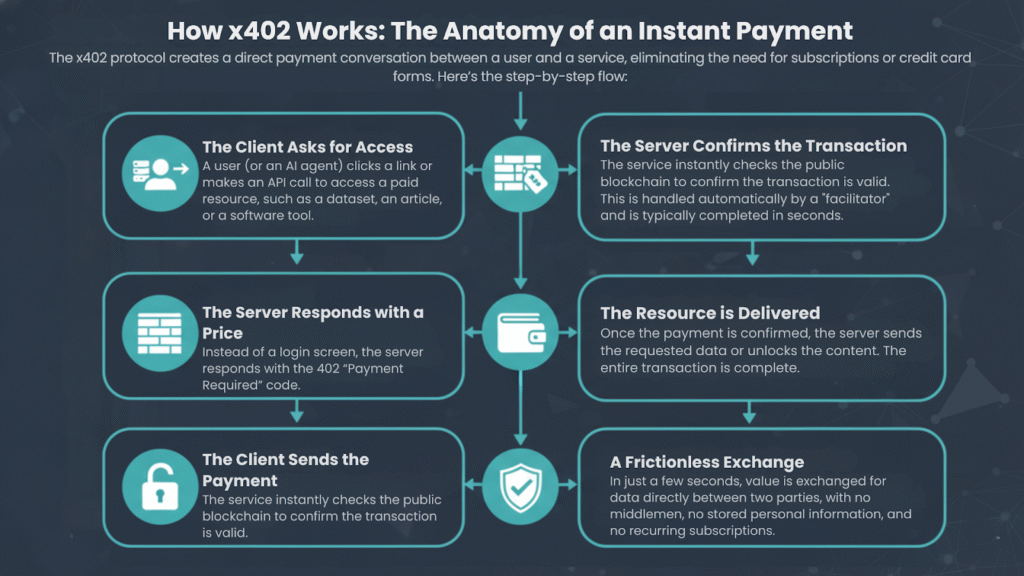
Proponents see it as a way to fundamentally rewire online monetization. This vision has attracted powerful allies and a range of applications. Coinbase itself describes use cases like charging per API call, per AI inference, or per piece of content. In September 2025, Cloudflare announced a partnershiр with Coinbase to create the x402 Foundation and integrate the standard into its agent-SDKs and server-side tooling. The applications extend to AI-driven services, cloud compute usage, and even machine-to-machine interactions. As one developer blog described it, x402 is about powering “AI agents pay-per-use for APIs, content and data” in a world of autonomous workflows.
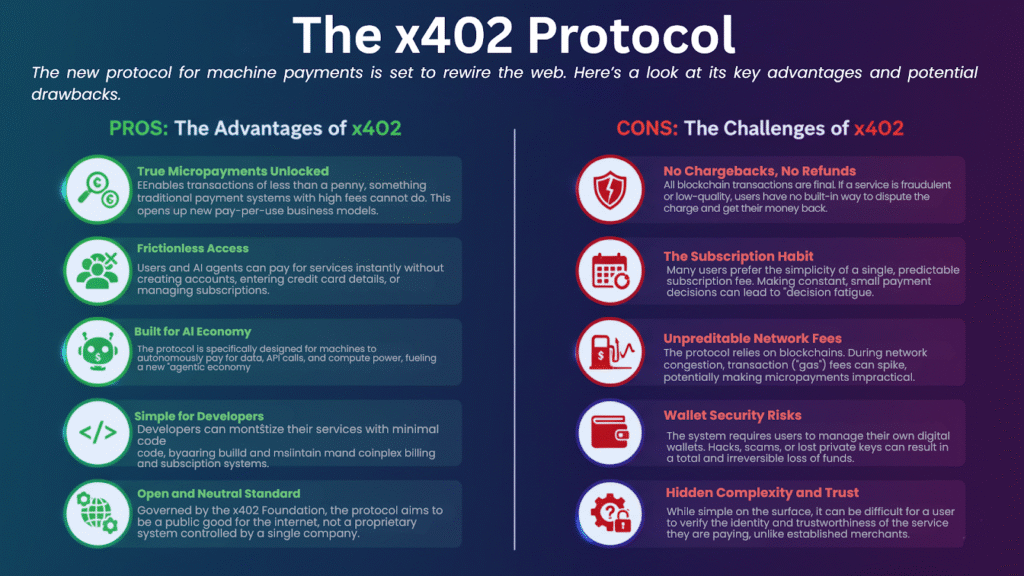
The protocol also presents challenges. Because cryptocurrency transactions are final, x402 payments have no chargebacks, placing the risk on the consumer if a service is fraudulent. Skeptics also point to the adoption barrier. A system of constant per-use payments may require a significant behavioral change from users accustomed to subscriptions.
Related: Trump’s $6.5 Billion Crypto Empire and Policy Shift
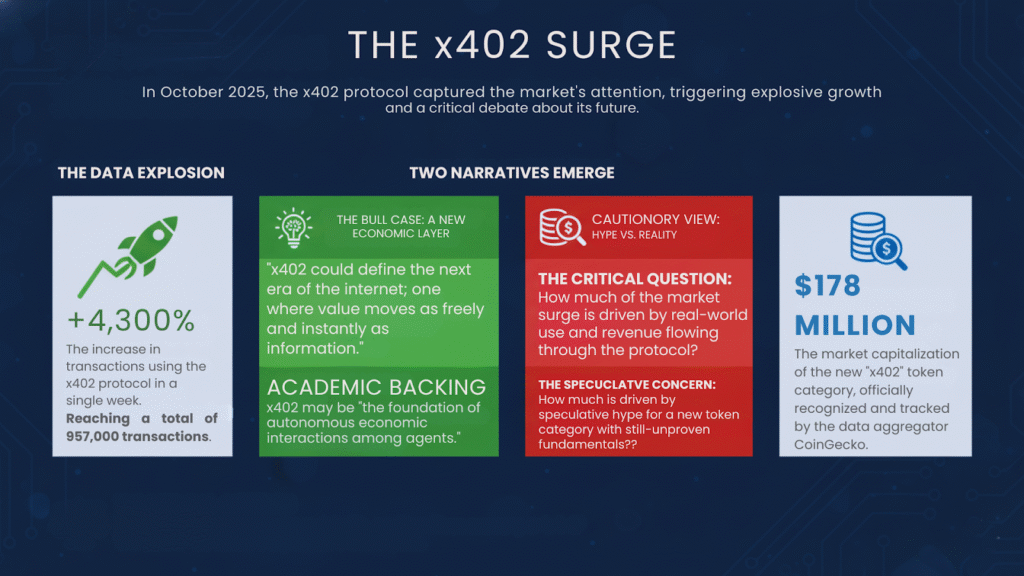
The protocol’s momentum triggered a speculative frenzy in October 2025. One report highlighted that transactions using x402 rose by more than 4,300% in a single week, reaching approximately 957,000. In parallel, the data aggregator CoinGecko added a new “x402” token category, which quickly cataloged an ecosystem market capitalization of about $178 million.
This surge invites both excitement and caution. One of the protocol’s co-authors expressed optimism, writing that x402 could “define the next era of the internet; one where value moves as freely and instantly as information.” Academic research has already begun to explore its implications, with one paper noting that х402 may be “the foundation of autonomous economic interaсtions among agents.”
Some commentary remains cautious. While the token surge is visible, the question remains how much represents real revenue flowing through the protocol versus speculative flows.
Related: Programmable Receipt: Ultimate Guide to Navigating the SOU NFTs
The revival of a nearly-forgotten web status code may seem like a niche technical footnote. The protocol stands at a confluence of stablecoins, the spread of APIs, the increasing autonomy of AI agents, and the web’s need for native payment rails.
If adoption grows, x402 could shift how content, data, and compute are monetized, transforming areas that include pay-per-article access and agent-to-agent cloud services. The sharp token interest also suggests early-stage speculation. Success will depend on the interplay of the code, new business models, user behavior, and regulatory clarity.
The journey is beginning and so is a new chapter for an internet where value moves like information.

Yona brings a decade of experience covering gaming, tech, and blockchain news. As one of the few women in crypto journalism, her mission is to demystify complex technical subjects for a wider audience. Her work blends professional insight with engaging narratives, aiming to educate and entertain.








 Follow on X
 Follow on Instagram